German Awards - Military Merit Cross
This award was established on December 8, 1914 by Prince Leopold IV. donated. The Military Merit Cross, without distinction of personality, was supposed to be a simple, visible sign of a special kind, but at the same time serve as an honorable reminder of that serious time for the families of the recipient for all time. Valor and special merits in the war, as well as merits received at home for the interests of the army, were noted.
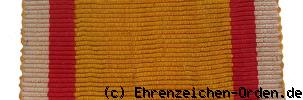
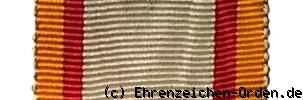
For military merits he was awarded a cross on a combat ribbon (yellow with red and white edge stripes). Officers, non-commissioned officers and soldiers of infantry regiment No. 55 and citizens of Lippa who served in other units had the right to admission. Proposals were processed by the military cabinet in Detmold. The only manufacturer was the court jeweler K. F. Zimmerman in Pforzheim. Several pieces were made of gilded silver. By the end of the war in 1918, several crosses were made of gilded zinc. It is also known about rewarding women with a female loop. This cross was also awarded to those who did not fight, who earned money at home. Whether it is caring for the wounded or any other activity that can contribute to the success of the war. These crosses were designated the Cross of Military Merit on a white ribbon (white with red and yellow edge stripes). On the combat tape until 1922 18.375 crosses and on the non-combat tape 1.117 crosses. There was no demand for a return. Source: Rainer Schwark, order and badge of honor of the principality of Lippe Detmold 1778-1933, works of the Lipp Land Museum, vol. VI, 2005.
A cross of gilded bronze with a smooth border. The inner sides of the cross sleeves are granular. On the upper cruciform shoulder there is a ball eye with a ribbon ring.
Front side:
In the - center of the cross is a five-petalled lippian rose.
- At a greater distance, a laurel wreath is tied on the cruciform sleeves below.
- On cruciform sleeves: at the top - L - exceeded by the crown. bottom: - 1914 -
Downside:
- On the cross sleeves: above: - FOR -, from left to right: - REWARD - IM -, below: - WARS -.
- Between the cross sleeves is a laurel wreath placed in front.
Tape:
- Volume 1 Fighter: yellow 35 mm wide, white/red 3 mm side stripes.
- Tape 2 non-combat: white 35 mm wide, side stripes yellow/red 3 mm each.
.
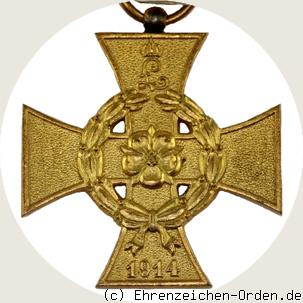 Obverse: Military Merit Cross
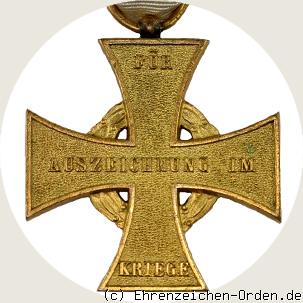 Reverse: Military Merit Cross
Established:
December 8, 1914, Prince Leopold IV.
Data:
- Material: Bronze gilded
- Size: 40.6 - 41.2 mm
- Weight: 18 - 24g
estimated collector price:
70 - €80 for fighters
80 - 90 € for non-combatants

 Awards of World War II