 Awards of
World War II
Awards of
World War IIThe Order of the British Empire, the youngest of the orders in the British awards system, was established on June 4, 1917, by King George V to reward individuals who have performed socially useful deeds in the name of the British Crown.
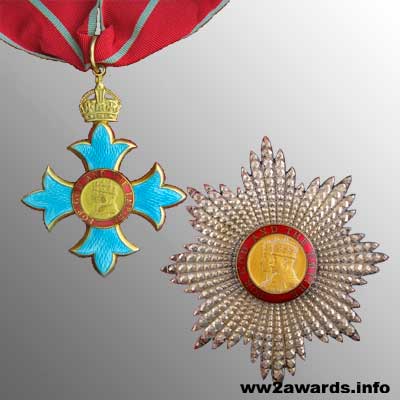
Materials
Gold, silver.
Award recipients
Military and civilian personnel of the UK and other countries.
Reasons for awarding
For actions in the name of the British Crown.
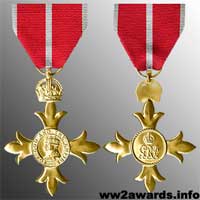
During World War II, 164 Red Army servicemen were awarded the Order of the British Empire, including Marshals Vasilevsky and Sokolovsky, with the highest degree of Knight Grand Cross, and Marshals Bogdanov, Moskalenko, and Sudets, and Generals Getman, Kravchenko, Malinin, and Shumilov, with the degree of Knight Commander.
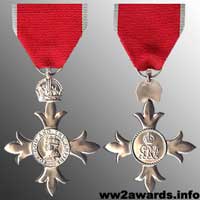
The award was established in 1917, during the First World War II, as actions worthy of significant praise were carried out en masse, and the British awards system did not provide for the awarding of existing orders to lower military ranks. King George V established this order of chivalry, consisting of five ranks: Knight Grand Cross, Knight Commander, Commander, Officer, and Knight Commander.
Holders of the two highest ranks become knights and receive the prefix "Sir" to their name; this does not apply to citizens of other countries. In 1918, amendments were adopted to the order's statutes, dividing it into two divisions—military and civilian. The order's motto is "FOR GOD AND THE EMPIRE."
Along with the establishment of the order, the British Empire Medal was also established. Recipients of the medal do not become members of the order and are divided into military and civilian divisions. The British Empire Medal was established for junior military and government officials, with senior officials being awarded the order immediately.