 Awards of
World War II
Awards of
World War IIThe Air Force Cross is a military award for all branches of the British Armed Forces, as well as allied countries. Awarded for valor, courage, and devotion to duty during flight, outside of combat.
Materials
Silver
Awarded to
Service members of the armed forces of the United Kingdom, as well as service members of other armies of Allied countries.
Reasons for the award
For valor and courage in flight.
During World War II, 2,001 people were awarded the Air Force Cross, including 58 citizens of other countries, 26 people were awarded this award. Twice.
The award was instituted in June 1918 and was to be awarded for "actions or acts of valor, courage, or devotion to duty while flying, though not in active operations against the enemy." The Air Force Cross was originally intended for officers and warrant officers of the Royal Air Force, and it was only after the end of World War II that it was authorized to be awarded to members of the Army and Navy.
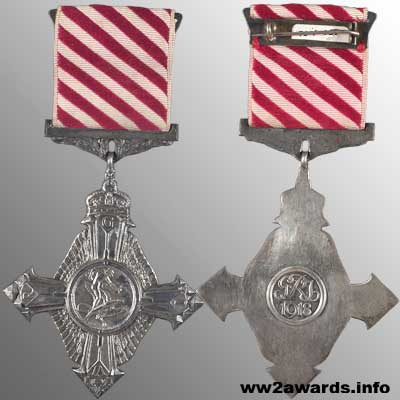
The award is a silver cross, 60 mm high and 54 mm wide, made in the form of propeller blades, with wings placed in the spaces between the arms of the cross. The edges of the cross bear the letters representing the monogram of the reigning monarch, and the top is adorned with a crown. The center of the Air Force Cross is decorated with a circular medallion depicting Hermes flying on a hawk. Hermes holds a laurel wreath in his hand, intended for the courageous recipient. Awards.
The award is attached to a ribbon bar decorated with laurel leaves, the bar being covered with a ribbon with alternating red and white stripes arranged at a 45-degree angle. Repeat awards are marked by a small silver Rose of Lancaster attached to the bar.